This doctor’s journey into arts has only pleasant side effects

Standard
Mississauga native Dr. Amitha Mundenchira pursued a career in medicine, but realized she received all health benefits only when she embraced dance and the arts. Supplied photo.

Mississauga native Dr. Amitha Mundenchira pursued a career in medicine, but realized she received all health benefits only when she embraced dance and the arts.
Supplied photo.

Even though Dr. Amitha Mundenchira, 36, dutifully walked the path envisioned by her parents to pursue a career in medicine, there was never a doubt in her mind about her true calling.

Except of course, in this case, turns out she had more than one.

Mundenchira’s physical and emotional journey was initially fraught with self-doubts and awkwardness, but once she found dance, it became a spiritual calling.

“I rediscovered my passion for arts through dance,” she said. “It’s almost as if I rediscovered myself in the process. Dance was another form of exercise, but because it was Bollywood dancing, I found myself completely immersed into it.”

Mundenchira’s story is one of inspiration and courage. Anyone that’s afraid to chase their dreams should take a leaf or two from her life. Let me retrace and start at the beginning.

Once upon a time, there was a studious girl who buried her face—and identity— in towers of bulky textbooks.  She completed the grueling demands of medical school with a single-minded focus and became a family physician.

Whenever she was stressed or emotionally drained, she found comfort in food. As a result, the girl was not only overweight, but she was weighed down by the monotony of her life.

And so life continued, Day after day as she sat doling advice to her patients about healthy living, she realized, it was hypocritical of her to tell them to practice what she told them to and not do it herself.

So, one day, on the lark, she signed-up for a Bollywood dance class, purged oily food from her diet and plunged headlong into a new territory. Slowly, the pounds began to fall, as did her awkwardness. It wasn’t long before offers for modeling; acting and dance performances came her way.

“Through dancing, I found a whole new world,” said a radiant Mundenchira. “I found I could de-stress through dance. Dance also helped me with my self-esteem issues. I realized could express through dance, anger, happiness or whatever other emotions I was experiencing.”

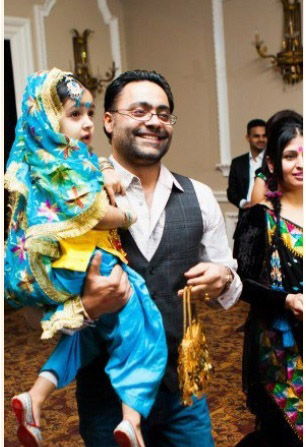
Dr. Amitha Mudenchira's the vivacious host of popular television show Hooray Bollywood on Zee TV. Supplied photo

Dr. Amitha Mudenchira’s the vivacious host of popular television show Hooray Bollywood on Zee TV.
Supplied photo

As an accomplished dancer/singer/actor/writer/television host (Hooray Bollywood) and artist currently conceptualizing a one-of-its-kind television show that will blend the therapeutic uses of arts and connect it to science, Mundenchira admits to finally finding her place under the sun.

“We are all here on the earth for a purpose,” she said. “It’s not about competing with others but finding your spot. After experiencing and enjoying various dance forms, I have come to the realization that medicine is not the only thing I want to do. I want to eventually fuse medicine and arts in some way.

All her artistic endeavours now have an underlying social message, a reason why she’s an integral part of organizations such as Divine Heritage Artistry, Sanskriti Arts Dance + Fitness studio and Limitless Productions.

Once she mastered Bollywood dancing, the Mississauga resident studied hip-hop, jazz and contemporary styles. Then she turned her sight on classical dance and music. Mundenchira remains unfazed by the fact that because of her rather late start in pursuit of dance, she now has to learn the basics of it alongside eight and nine year-olds.

“Ultimately, it’s not about dancing,” she said. “It’s about being myself through dance. I went from a person with low self-esteem who looked at everything negatively to a person who’s always trying to look for something good in every situation. That happened because of the self-enrichment.”

You can follow Mundenchira through her artistic profile.

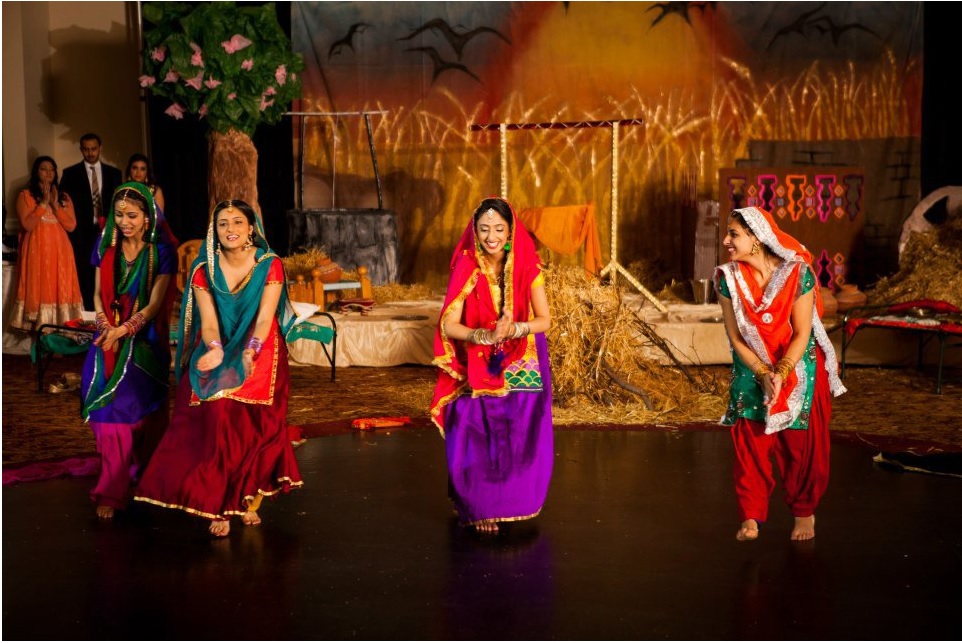
Dr. Amitha Mundenchira's physical and spiritual transformation came about when she discovered dance. Today, she's an accomplished singer, dancer, TV host, family physician and writer. Supplied photo.

Dr. Amitha Mundenchira’s physical and spiritual transformation came about when she discovered dance. Today, she’s an accomplished singer, dancer, actor, TV host, family physician and writer.
Supplied photo.

Move over butter chicken, the Kerala chicken curry is here

Standard
Kerala, a coastal state in India, boasts of cuisine that's full of flavours. The Kerala chicken curry is especially a universal favourite

Kerala, a coastal state in India, boasts of cuisine that’s full of flavours. The Kerala chicken curry is especially a universal favourite.

In the earlier posts, I attempted to capture some sights and stories of South Asians in Toronto.

Well, it’s time to direct the rickshaw towards some culinary delights. A highlight Toronto’s multicultural identity is that the city offers its patrons a whole variety of ethnic food to choose from. Some are wildly popular, others remains hidden gems. If I asked you to cough up the names of some Indian dishes, you are more than likely to answer: butter chicken, naan, chicken tikka or palak paneer.

Since the Canadian palate appears to have fallen in love with the mild flavours of the ubiquitous butter chicken and its perfect dance partner, naan, most restaurateurs are wary of introducing anything else on their menu. If it works, why fix it, right?

Here’s the thing; Indian cuisine, much like the country itself is vast and varied. Each region has its own distinct culinary style.  Many of the dishes will tantalize the taste buds and send you to food nirvana.

Yes, it’s great, butter chicken and the samosas have nudged their way right into the mainstream fare, but these are not the prototypes of India’s mind-boggling gastronomy. Allow me to introduce you to some less-known, nevertheless great mouthwatering dishes.

Nestling amidst swaying coconut trees and lush greenery, is Kerala. A coastal region in the Southern region of India characterized by groves of mango, jackfruit and coconut trees, punctuated with rubber, coffee and tea plantations, cashew nut trees and orchards redolent with spices such as cardamom, cinnamon and pepper.

Often referred to as God’s Own Country, Kerala definitely lives up to its moniker. What’s unique about Kerala’s cuisine is that unlike the calorie-laden richness of butter chicken, food hailing from this region is light (as it’s steamed or cooked with minimal oil). The dishes sport rich flavours tempered usually by a paste of coconut, ginger, green jalapeno, black pepper, nutmeg, cardamom and other spices.

Fish, fowl and vegetables are an integral part of Kerala’s cuisine. At the time of festivals, weddings and other occasions, food is served and eaten on a banana leaf.

Here’s a recipe for Kerala chicken. You can substitute the fresh powdered spices with (Eastern brand Chicken masala) readily available in any Kerala store in the GTA.

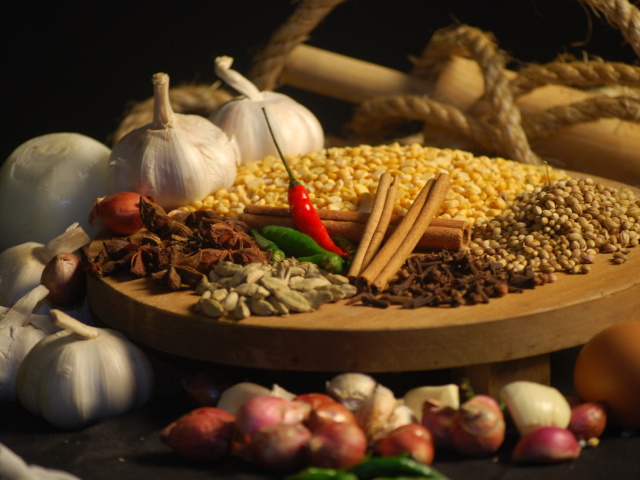
Kerala cuisine is redolent with spices such as cardamom, peppercorn and coconut. Image courtesy Zastavki.com

Kerala cuisine is redolent with spices such as cardamom, peppercorn and coconut.
Image courtesy Zastavki.com

KERALA CHICKEN CURRY

Serves six

You will need:

Chicken – 2 lbs. bite-sized pieces

Onions – 1 large chopped

Tomatoes – two large diced

Ginger/ garlic paste – 1½ teaspoon

Oil (Canola/vegetable) – 3 tablespoon

Coconut (grated) – 1/3 cup

Red chilly powder— 1 teaspoon

Fennell seeds — ½ teaspoon

Cumin seeds — ½ teaspoon

Peppercorn— ½ teaspoon

Cloves — 4 nos.

Cinnamon— 1-inch stick

Cardamom — 3 nos.

Lemon juice — one lime/lemon

Yoghurt— 3 tablespoons

Prep work:

Marinate chicken pieces in lemon juice, yoghurt and salt. Refrigerate for a couple of hours

Dry roast on low flame and powder: Fennel seed, cumin, cloves, peppercorn, cardamom and cinnamon

Kerala's cuisine boasts of staples such as coconut and fresh aromatic spices such as peppercorn, cardamom and cinnamon.

Kerala’s cuisine boasts of staples such as coconut and fresh aromatic spices such as peppercorn, cardamom and cinnamon.

Instructions
1. Heat oil in a non-stick or heavy-bottomed pan. Toss and saute the onions.

2. Add ginger, and garlic paste. Cook until onions turn golden brown.

3. Add diced tomatoes till it softens and has a sauce-like consistency. Add salt, red chilly powder and Eastern chicken masala. Turn the heat to minimum.

3. Toss in coconut (grated either fresh or frozen) and about 1 ½ tablespoon of powdered spice mix. Add very little water and make a paste.

4. Add coconut and spice paste to the simmering sauce. Saute for 2 to 3 minutes. Add half-a-cup water.

5. Now add in the chicken pieces. Cover and cook in medium-low heat for 20 minutes. Check to ensure chicken is fully cooked. Sprinkle remaining dry spice mix. Cover and let the flavours sit.

Enjoy it with steamed white rice or tortillas

Pink Ladoos: empowering the community through dance

Standard
Nach Balliye, a dance group, started a grassroots movement here in the Greater Toronto Area (GTA) to celebrate the girl-child. Photo courtesy Nach Balliye

Nach Balliye, a dance group, started a grassroots movement here in the Greater Toronto Area (GTA) to celebrate the girl-child.
Photo courtesy Nach Balliye

The recipe to create pink ladoos is quite simple. It’s passion mixed with equal parts dance and activism, served with a dollop of empowerment.

Pink ladoos are not just about adding a rose-coloured hue to a dessert; it’s an extraordinary idea that celebrates the girl child and her arrival into a world that’s bent on rejecting her. It’s about letting the entire community know the precious bundle of joy swaddled in blanket needs human warmth and love as much as the boy child.

Licensed commercial pilot Sumeet Gill, 29, started Pink Ladoos, a grassroots movement in Canada this past year after a chance meeting with Dr Harshinder Kaur, a world-renowned activist from India few years ago. Despite death threats on her life by disgruntled critics, Dr. Kaur continues to carry on a passionate crusade against female feticide.

A father brings his daughter to the Lohri for Her, an event in Toronto by Nach Balliye, that celebrates girls. Photo courtesy Nach Balliye

A father brings his daughter to the Lohri for Her, an event in Toronto by Nach Balliye, that celebrates girls.
Photo courtesy Nach Balliye

So impressed was Gill by the pediatrician from Patiala, India, she took time off from her work and followed her to Punjab. As Gill and the doctor travelled to remote villages talking to women, it became apparent the prejudice against girls was deep-rooted and stubbornly entrenched in the psyche of people. Horror turned to disbelief when Harshinder Kaur told Gill the gender ratio of boys to girls in Brampton, Ont. was even more distorted (higher) than that in Punjab.

“I was shocked when Dr. Harshinder Kaur told me the issue of female feticide was common here in Canada as well,” Gill said. “Her strategy was to reach out to youth in the GTA and appeal to them to reject old customs. I was very inspired by her. So, I arranged for her to come back and talk at a seminar I organized. At the seminar, the doctor spoke to us about the consequences of female feticide on the human race, not just one community. It was quite an eye opener.”

The talk lit a fire in the youth. Gill who was part of Nach Balliye, a dance group she and her friends formed to promote culture at that time, decided to use the power of dance to educate families. They turned Nach Balliye into a springboard of activism. Then, this past year, Gill and her friends started another grassroots movement in Canada—Pink Ladoos. The purpose of Pink Ladoos is to start a dialogue with Punjabi families shackled by outdated social norms.

How does it work? New parents, blessed with a girl register at Nach Balliye’s website. The Pink Ladoo team, dressed to the nines in traditional dresses, visits the home of the parents with a box of pink ladoos. Once there, they inject the home with with their dance and music. Then they connect with every member of the child’s family and talk to them about nurturing the girl.

“As a group we decided to come up with mechanisms to celebrate and focus on the positive,” said Gill. “We wanted to be part of the solution. I believe if we bang on doors long enough, they will open.”

Lohri is a harvest festival celebrated by the Punjabis. Lohri for Her, a grassroots movement recreates a scenic village in Punjab to host its annual event. Photo courtesy Nach Balliye

Lohri is a harvest festival celebrated by the Punjabis. Lohri for Her, a grassroots movement recreates a scenic village in Punjab to host its annual event.
Photo courtesy Nach Balliye

Dr. Harshinder Kaur serves as a GPS for the Canadians. While she continues to work—at the macro level — with various governments and international agencies such as United Nations (UN) orchestrating policy changes to curb female feticide, Nach Balliye is attempting to change the mindset of people at the micro level through Pink Ladoos and Lohri for Her, an annual event where the girl child is celebrated during the harvest festival of Lohri.

“We are not an event, we are a movement,” says Neeli Grewal, one of the members of Nach Balliye. “Pink Ladoos is a validation for the family to celebrate the girl-child. Our vision is to raise awareness of the issue of gender-selection by going door to door. Our movement is already creating a ripple effect. In just few years, we hope to make Lohri for Her a Canada-wide initiative with events taking place simultaneously across different cities in Canada.”

For more information visit http://www.lohriforher.com.

Ethnic media and Teflon mayors

Standard
According to the National Ethnic Press and Media Council of Canada there some 75 South Asian newspapers; 55 broadcast companies scattered across the Greater Toronto Area (GTA). These papers consider themselves "opinion builders."

There are some 75 South Asian newspapers; 55 broadcast companies scattered across the GTA. (Source: National Ethnic Press and Media Council of Canada) These papers consider themselves “opinion builders” and can be picked-up from any ethnic grocery store.

Last year, Brampton’s Mayor Susan Fennell, doled out her best wishes—through official press releases — to the city’s South Asians for a slew of desi festivals.

Fennell’s attempt to endear herself to the city’s South Asians may have something to do with the upcoming municipal elections.

If the editor of a Punjabi daily is to be believed, Fennell will win despite a controversy surrounding her use of taxpayers’ monies for travel and tourism.

While the mainstream media, including the one I work for, has been receiving a deluge of letters from citizens expressing outrage at Fennell’s penchant for first-class travel, the ethnic media is in a forgiving mood.

Similarly, Toronto Mayor Rob Ford—a public relations nightmare — has the support of many from Chinese community, says Arjuna Ranawana, manager, OMNI Toronto.

Ranawana should know.

His news outlet is a fixture at ethnic events, be it a celebration, festival or an issue of national importance. In short, OMNI has its ears to the ground.

So, in the wake of Ford’s cocaine scandal, when OMNI News’ Mandarin and Cantonese speaking crew took to the streets of Toronto’s China Town, they found many people were still solidly behind Ford. Huh, who knew? But that scenario can change if Olivia Chow decides to throw her hat in the ring, said Ranawana, a member of the Canadian Ethnic Media Association (CEMA).

“Our niche and our effectiveness comes because we are very connected to the ethnic community, not just to the newer communities like the Chinese and the South Asians, but older ones like the Italians and the Polish,” he said. “When two generations of families are born here, they become consumers of mainstream media. We serve the older generation and new immigrants. Our strength lies in the fact that we are able to report Canadian content in people’s language of comfort.”

This tenacious connection, believe it or not, is a huge deal to those otherwise isolated because of language barriers.

The National Ethnic Press and Media Council of Canada, whose mandate is to promote and integrate the interests of ethnic communities into the mainstream, says there some 75 South Asian newspapers; 55 television and radio outlets scattered across the Greater Toronto Area (GTA).

Those numbers reflect the group’s appetite for politics. It doesn’t matter which country they hail from, the desis are vocal. In Toronto, any grocery store that stocks curry powder, vegetables and condiments, will also house boxes holding stacks of free newspapers in Punjabi, Hindi, English, Tamil and Urdu.

Jagdish Grewal, editor/publisher, Canada Punjabi Post, believes Fennell will be re-elected again.

“The Punjabi community will still support Mayor Susan Fennell,” Grewal told me. “She’s very outgoing and has developed links with every single organization. She attends all functions and has build personal relationship with everyone.”

A few years ago, when the Indian International Film Festival Awards (IIFA) came to Toronto, Fennell walked the carpet in a cerulean blue salwar-kameez (traditional dress) to take in the premiere of a mindless three-hour Bollywood caper. At that time I remember thinking only a seasoned politician can sit through that ordeal.