June brings a colour fest, a Brown Pride, classical concerts and so much more in Toronto

Standard

The 2nd annual Rung De ONE event will take place Sunday, June 14 at the The Great Punjab Plaza, 2960 Drew Rd. Mississsauga from 12 noon to 5 p.m. Supplied photo

June officially signals the arrival of summer here in the GTA. So, slather yourself in sunscreen lotion and unearth those flip-flops. Check out these events in June 2015.

Friday, June 5
Event: Besharam Pride
Details: Besharam, Toronto’s hip and happening club, which defines itself as a destination for people of all sexual orientation and cultures, will be hosting Besharam Pride at the Revival, 783 College St. from 10:30 p.m. to 3 a.m. Tickets cost $10 (women) before 11 p.m. and $15 after. For men, it’s $20/person.
Contact: www.besharam.ca

Saturday, June 6
Event: Halal festival
Details: The 2nd Mississauga Halal Festival returns this year after a smashing success last year. The free event takes place at the Celebration Square in Mississauga from 11 a.m. to 11 p.m. and will include dozens of vendors, suppliers and products. The main goal is to bring suppliers, retailers and consumers all together under one roof, say organizers.
Contact: Here

Sunday, June 7
Event: Kabbadi
Details: Metro Punjabi Sports Club will host a Kabbadi tournament at the Powerade Centre, 7575 Kennedy Rd. S.
Contact: Balraj Cheema, 416-399-3000

Sunday, June 14
Event: Rung De One
Details: It’s the 2nd annual Rung De One, a celebration of the festival of Holi. The colour fest will take place between 12 noon and 5 p.m. at The Great Punjab Plaza, 2960 Drew Rd. Mississauga. Tickets cost $20/person.
Contact: rungdeone.com

Saturday, June 20
Event: Classical Concert
Details: The Toronto Classical Group will present an Evening of Enchanting Classical Vocal Music featuring Kaushiki Chakraborty. The event will take place at the Don Bosco Catholic Secondary School, 2 St. Andrews Blvd. Etobicoke at 7 p.m.
Contact: http://www.torontobengali.com/

Sunday, June 21
Event: Jashan in the Baug
Details: The Ontario Zoroastrian Community Foundation will be showcasing the North American Mobeds in a Khushali nu Jashan taking place at 1187 Burnhamthorpe Rd. E. Oakville, ON at 3 p.m.
The Jashan will recognize the work of senior and youth mobeds that have served the community. There will be lunch and entertainment by the youth of Ontario Zoroastrian Community Foundation (OZCF).
Contact: Here


Aakash (sky) is the limit for the company that makes world’s cheapest smartphones

Standard
Suneet Tuli, CEO, Datawind, maker of the world's cheapest tablet/phablet says by seeking out alternate sources of revenue from content, ads and apps, his company is able to sell the devices for less than $40 (CAN).

Suneet Tuli, CEO, Datawind, maker of the world’s cheapest tablet/phablet says by seeking out alternate sources of revenue from content, ads and apps, his company is able to sell the devices for less than $40 (CAN).

This is the second and final part of the two-blog series

When the Tuli family settled in Fort McMurray, Alberta, in the late ‘70s, they were the only Sikh family in town.

Being gawked upon was not uncommon, as was name-calling. However, the four Tuli kids excelled in school and in many ways were gifted. Mother Parveen Kaur, a poet and artist worked at the family’s construction firm and when she was not handling the books there, she immersed herself in her artistic pursuits.

Sikhism was not just a religion for the Tulis. It was a blueprint for life.

In Grade 12, Suneet Singh Tuli, CEO of Datawind, ruffled more than few feathers when he a filed human rights complaint against his school for suspending him because he carried the ceremonial dagger (kirpan) to school.

“In Sikh religion when you get baptized, you’re told Guru Gobind Singh is your father. My mother, grandmother and other elders in the family always emphasized that belief in us,” he said. “Our faith was strong. So, we grew up with a sense that we were special and that created a different mindset.”
He won.

The 10 per cent factor

A few years ago, Raja and Suneet Tuli decided to wade into the turbulent Indian cellphone/tablet market despite knowing fully well the country’s cumbersome bureaucracy and corruption could result in headaches and heartaches. Yet, they went ahead because they wanted to bridge the digital divide in the developing world where an overwhelming number of people live in poverty and have no access to technology.

Remember Suneet’s penchant for gimmicks? That was sort of responsible for Datawind chasing the Indian government to contract it with an order to deliver 100,000 units of Aakash 2 (a low-cost tablet).

The Datawind CEO wanted to set another record, this time for the world’s cheapest tablet. So, the company competed in the bidding. Turns out, Datawind’s bid was 20 per cent cheaper than their closest competitor.

Aakash 2 is cheapest tablet in the world. Even in China, a haven for low-cost components, a similar device sells for $40 and up at least. The android device, unlike its predecessor Aakash 1 has a competent processor and adequate RAM.

Initially, the company ran into trouble as it was unable to fill the order before deadline, but that was only a small setback and it pushed on.

On a quarterly basis, Datawind sells around 900,000 tablets and enjoys 15 to 18 per cent of the total market share for tablets/phablet in India. In the 5,000-rupees segment (low end price bracket), they are the indisputable monarchs as they boast a 55 per cent of the market share.

How on the earth?

Can somebody manufacture a low-cost product and still remain sustainable (financially)?
First off, Datawind makes its own touch screens. The firm set up a thin-film fab in Montreal and in the late 90s Raja decided to make touch panels there. In 2010, the Chinese delivered touch panels for a seven-inch device for approx. $20/piece (CAN), but Datawind was able make the same at their Montreal plant for a fraction of that cost.
Suneet explains the company’s business model focuses on selling its hardware at cost and finding revenue from apps, contents and ads.

Then, there’s Raja’s ingenuity. His technology shifts the burden of processing devices from client servers to back-in servers. So, despite a five per cent margin, Datawind’s low-cost products are not only helping the company’s bottom line, but are also meeting its original premise of making these devices affordable to the masses.

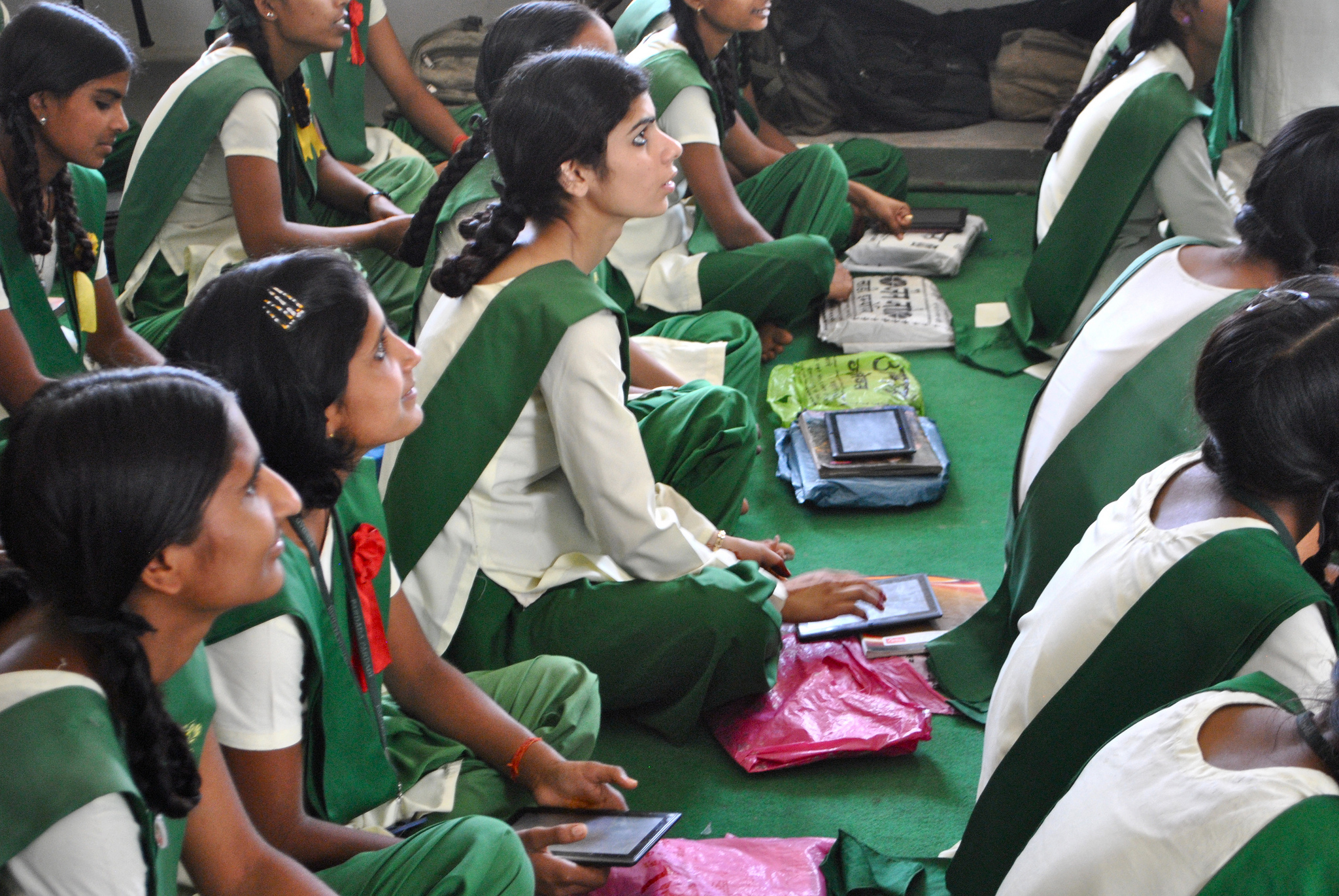
School girls in the state of Rajastan step into the digital age via Datawind's Ubislate tablet, touted to be the cheapest device in the world retailing at under $40 (CAN).

School girls in the state of Rajastan step into the digital age via Datawind’s Ubislate tablet, touted to be the cheapest device in the world retailing at under $40 (CAN).

“It’s not that people can’t make low-cost devices,” Suneet said. “The fact is nobody wants to compete in the entry-level market. I call it the forgotten billions. There are a billion people whose monthly income is less than $200/month. We want technology to be accessible to them. I strongly believe the Internet is the most powerful thing. It will not only educate people, but also empower them.”

One of the tenets of Sikhism urges people to donate 10 per cent of their earnings in acts of charity. Datawind adopted an orphanage in Punjab and donated a bunch of computers to them, but the machines weren’t put to great use, but over the years, Suneet became interested in combining technology and education.

“To me, all this is a very important validation to create awareness that we can survive on low-cost devices and to evangelize the benefit of having affordable devices and technology and the impact it has on education,” Suneet told TDD. “This (cheapest tablet/phablet) was my gimmick, the equivalent of the Guiness World Record we attempted years earlier.”


How a gay Hindu wedding in Toronto changed the conversation

Standard
Rishi (left) and Dan married in 2011 in a traditional Hindu wedding. The couple are talking about their same-sex wedding and their individual journies in the hopes of creating awareness about LGBT issues. Supplied photo.

Rishi (left) and Dan married in 2011 in a traditional Hindu wedding. The couple are talking about their same-sex wedding and their individual journeys in the hopes of creating awareness about LGBT issues. Photo courtesy of Channa Photography.

Daniel Langdon and Rishi Agarwal’s love story is not a one-dimensional, linear relationship of two gay men falling in love and getting married.

Instead, when you analyze their relationship from the perspective of the society, cultural norms and religion, the central characters of this saga are not the two grooms, but, the Hindu priest that risked condemnation of his peers to perform all the rituals; Rishi’s parents – Vijay and Sushma – whose acceptance and unconditional love will hopefully help change the narrative of homosexuality within the Indian community here in North America and Daniel’s family who embraced Rishi and his culture.

These folks put aside their own pre-conceived ideas just so Rishi and Dan could experience the same happiness a heterosexual couple would have under similar circumstances.

RELIGION: Growing up in a Hindu home, Rishi learned the traditions by osmosis. As a kid, he was was bullied. He remembers coming home from school; heading straight to the mandir (temple) in his home and breaking down in front of the deity.

“Faith was very important for me,” Rishi said. “It helped me get through all of the struggles I went through as a child. My connection to that (force) we don’t fully understand is through Hindu rituals. So, for me to have a wedding and it not be a Hindu wedding was impossible.”

Daniel and Rishi were married in 2011, so why are we telling this now? This story is timeless because the couple realizes the enormous challenges gay people around the world face. The two accountants living in Toronto are aware that for individuals identifying themselves as gay within the desi community, the road is uphill.

Many choose to remain in the closet fearing the wrath of parents and the community. Rishi and Dan said they want to open a dialogue on homosexuality, religion and acceptance to prompt a social change.

It has been three years since their Big Fat Gay Hindu Wedding, but theirs may have been the only gay Hindu wedding to incorporate all elements of tradition, culture and the whole nine yards. There have been no others since then. Even though religion was not a huge factor in Dan’s coming out, he knew as soon as he connected with Rishi that Hinduism would be an integral part of their wedding and life afterwards as a married couple.

It takes a family to make a wedding memorable. From L to R: Vijay, Rishi, Dan and Sushma at the same-sex Hindu wedding of their son, Rishi with Dan. Supplied photo.

It takes a family to make a wedding memorable. From L to R: Vijay, Rishi, Dan and Sushma at the same-sex Hindu wedding of their son, Rishi with Dan. Photo courtesy, Channa Photography.

“I really like Hinduism,” Dan said. “It has a very open-minded approach to practicing it and it’s inwardly reflective. What I like is that the rituals are prescribed, but the actual thinking –at least from my experience –isn’t. So, it’s up to the individual to make that connection…”

WEDDING: Rishi remembers the day he came out to his parents. At first, they were speechless and sat in stunned silence. Then, they spent the next 72 hours researching and reading about homosexuality and trying to educate themselves. So, when a nervous Rishi, tentatively asked his parents if they expected him to move out of the house, his father told him, “Absolutely not. You’re still our son and we love you…”

His parents’ acceptance made Rishi’s journey that much easier, unlike so many others. In high school, Rishi knew of a gay Sikh boy who committed suicide when his parents refused to accept his homosexuality. Rishi and Dan’s wedding was a magical affair with all the bells and whistles. The Sangeet took place at the Agarwal house and Dan’s family put together a musical along the lines of 12 Days of Christmas.

The grooms had matching henna motifs of the other person’s initials. During the planning of the wedding, several Hindu priests turned down the Agarwals, finally, a maharaj ji, agreed to perform the rituals. It was poignant, memorable and a path-breaking affair. The garlands were sewn with red and white roses accented with blue and green orchids. The grooms looked resplendent in Sherwanis. Dan opted for a pale blue one with silver sequins while Rishi chose gold and crimson attire.

JAI AND VEERU: In 2013, the couple made a trip to India, and rather than explain their relationship to tour guides and hotel concierges, Rishi told everyone he and Dan were like Jai and Veeru of Sholay. That description was so apt and universally well received that it made a mystic journey to a land where homosexuality is frowned upon smooth and hassle free.

HUMOUR: I knew Rish and Dan were made-for-each other when 10 minutes into our conversation, Dan delivered a “baniya” joke with a straight face. It was when I asked them their plans for Valentine’s Day and Dan replied, “We don’t believe in Valentine’s Day, but since we are baniyas, we will probably celebrate it the next day!” FYI (In India, the Baniya community, which the Agarwals belong to are made fun of for their tight-fistedness).

In 2011, Dan and Rishi, had a gay Hindu wedding that succeeded in breaking stereotypes. Today, the couple are telling their story in the hopes of creating awareness. Supplied photo

In 2011, Dan and Rishi, had a gay Hindu wedding that succeeded in breaking stereotypes. Today, the couple are telling their story in the hopes of creating awareness. Photo courtesy of Channa Photography.

And so, when the talk of cuisine came up, Rishi gleefully narrated the story of how an unsuspecting Dan ended up taking a big bite of the spicy Indian jalapeno peppers (known as green chillies) that his Mom had garnished the yoghurt dip with. He assumed they were string beans and quite literally turned a deep shade of crimson.

Mirth aside, the two Torontonians, who met online and fell in love, know they are fortunate.

“I am happy and proud to be Canadian because we are in the forefront when it comes to gay rights,” Rishi said. “Also, I am proud to be living in Toronto because we have such a large Indian community that we were able to arrange for everything (for a wedding). To have a gay Hindu wedding is not something that can be done in any city in the world…”

“There’s also a big unspoken part that people don’t speak about and that is the limited understanding and acceptance about gay issues. I think in Toronto and the rest of the world, there still needs to be a greater awareness about LGBT issues. We need a lot more education,” he said. “A lot of couples will do a court marriage, the difference in our case was: we had our parents’ support. You cannot do a Hindu wedding without family and friends…”

If you like art that’s edgy, then you’ll love Vishal Misra’s work

Standard
Vishal Misra, an accomplished artist/illustrator seen here with his work. The Toronto accountant has successfully made a name for himself here in North America with his works. Supplied photo.

Vishal Misra, an accomplished artist/illustrator, has successfully made a name for himself here in North America with his works. Supplied photo.

Before you read on, I want you to:

Mentally strip all existing artwork from the walls of your favourite room; ditch the decorative curios, collectibles and what not crammed in the tables and sideboards.

Then, in your mind’s eye, visualize a Vishal Misra art (large acrylic canvas featuring a subliminal Indian theme) placed strategically at eye-level.

Each time I have performed this exercise, I have been stunned by how Vishal’s work can complete any space with its hypnotic presence. The room doesn’t need anything else to embellish it.

Here’s neat thing; one doesn’t have to be a connoisseur of art or schooled in some aspect of it to appreciate the lines and the stroke of his brush and the harmony of colours.

Vishal’s repertoire of subjects spans the breadth of human consciousness. Spiritualism, eroticism and street scenes from India are all elevated into abstract pieces that speak to you on a visceral level.

Recognize a whiff of Picasso or M.F. Hussain in Vishal’s work? That’s incidental. The Toronto artist/illustrator admits he’s self-taught and heavily influenced by the cubistic styles of the two masters.

During the day, this transplant from Mumbai, handles numbers, financial projections and audits. In the evenings and weekends, he transforms into an all-consuming artist completely lost in the pigment of his imagination. Yes, that’s a “pigment” not figment.

“As an accountant and artist, I balance two lifestyles,” Vishal says. “Between 9 a.m. to 5 p.m. the left brain is boxed in with rules, regulations and numbers, but then when I am on the GO Train and I get my hands on a blank page, I feel can do whatever I want and let the right brain take over.”

Well, it was in the train Vishal realized the potential of his talent.

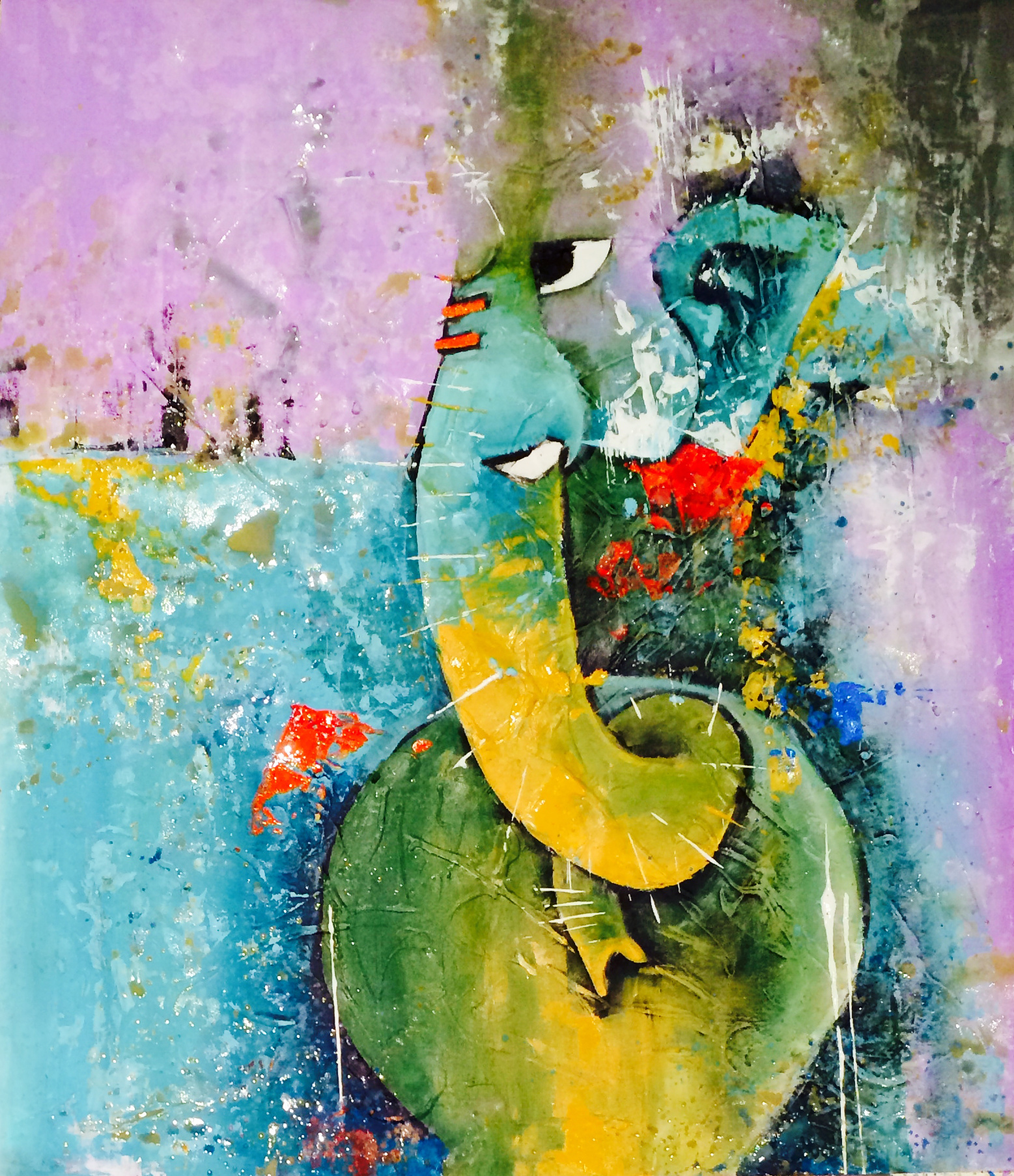
Vishal Misra, a transplant from Mumbai, has a deep connection with Lord Ganesh. His interpretation of the Elephant God elevates the piece. Vishal, a well-recognized artist commands four-figure numbers for his artworks and is well-known in Toronto. Supplied photo.

Vishal Misra, a transplant from Mumbai, has a deep connection with Lord Ganesh. His interpretation of the Elephant God elevates the piece to a subliminal experience. Supplied photo.

A few years after Vishal immigrated to Canada, he was on the train, doodling away and oblivious to his surroundings when a fellow passenger asked him if he would give her the sketch he was working on. Vishal refused. The woman persisted and then offered him $50.

“The accountant in me became interested when she offered the money,” he recalled. “That was the first time I realized that people would actually pay for my art.”

Born to middle-class parents, Vishal grew up in Mumbai. Even though his Dad dabbled in art (purely as a hobby), his parents believed academics was the only thing that mattered. And like every other South Asian parents on the planet, the Misras too wanted their son to become either a doctor or an engineer.

When Vishal landed in Toronto, he went back to school, upgraded his education and soon after landed a job with a well-known accounting firm. At this time, he began to reconnect with the easel and the brush and became a member of the Mississauga Arts Council (MAC). The consortium helped him to grow, network and interact with other artists.

Over the last eight years, Vishal’s works have graced the walls of numerous solo and group exhibitions in Canada, the U.S., Asia, Middle East and Europe. Some of his bigger works currently command four figures and an artist, Vishal is well recognized here in North America.
In 2005, Vishal met and married Anu Vittal, an artist as well and began to articulate his emotions through art. In Anu, Vishal found his muse. Sketches with underlying tones of eroticism soon began filling his sketchbook.

“I wanted to explore the idea of a human relationship and how it grows, evolves and continues,” he explained. “Sexuality is a big part of that because it represents an intersection of emotional and physical aspect of the relationship.”

Vishal then decided to interject contemporary and western-style elements to traditional Kama Sutra images. His fresh linear look offers a new perspective to century-old art.

Toronto native Vishal Misra took the traditional positions of Kama Sutra, an ancient Indian tome on sexuality and added a modern and contemporary twist to it.
Supplied photo.

“I wanted the sketches to be both evocative and provocative,” he said. “I interplay the interaction of various positions of the male and female form beyond the realm of black and white.”

In each and every piece, Vishal infuses his art with his interpretation of events. He begins by capturing an idea then distorting it so that the viewer sees in it what they want to see.

You can take a peek at Vishal’s portfolio here.


Brar’s hits a sweet spot for desis during Diwali

Standard
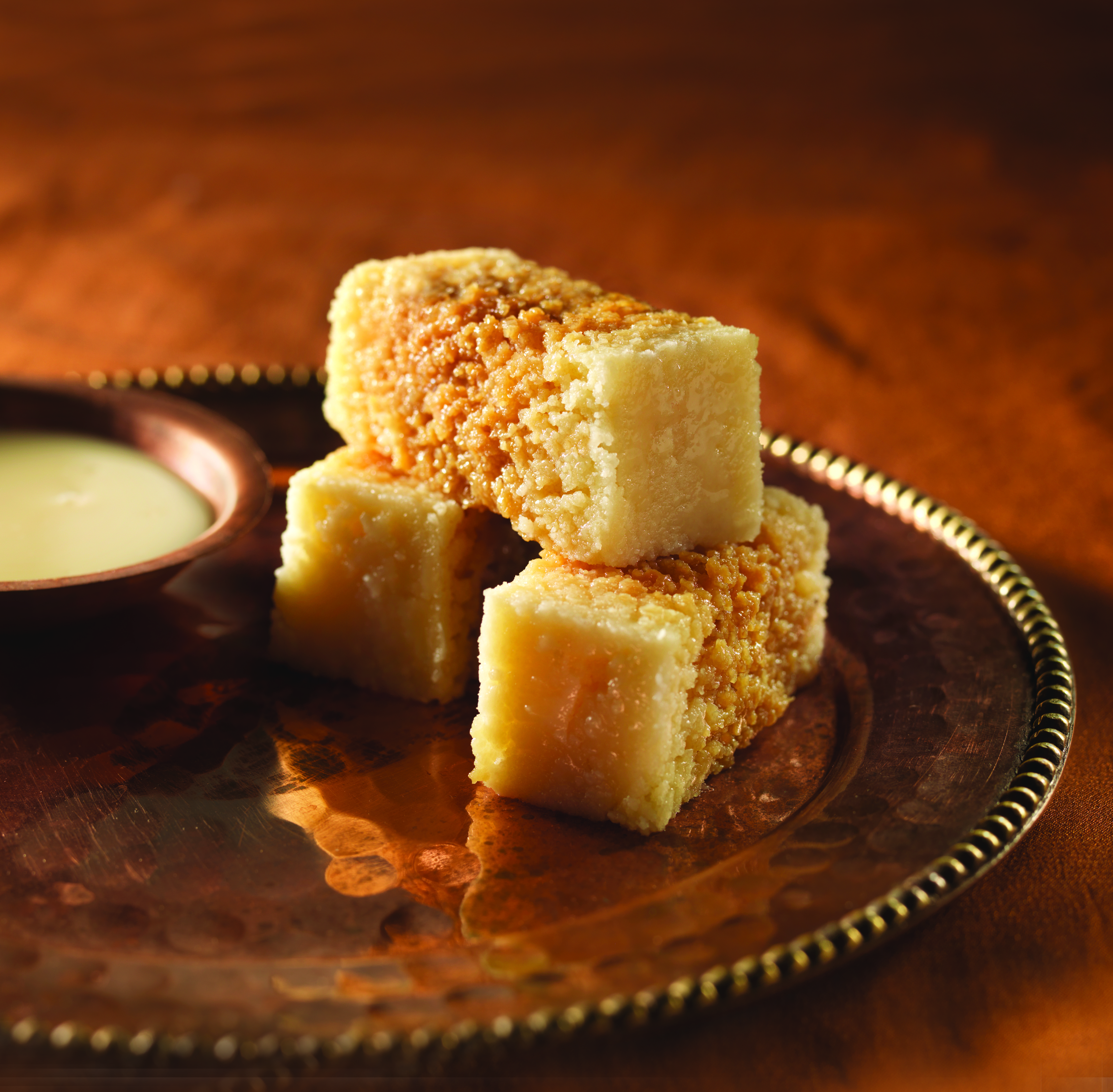
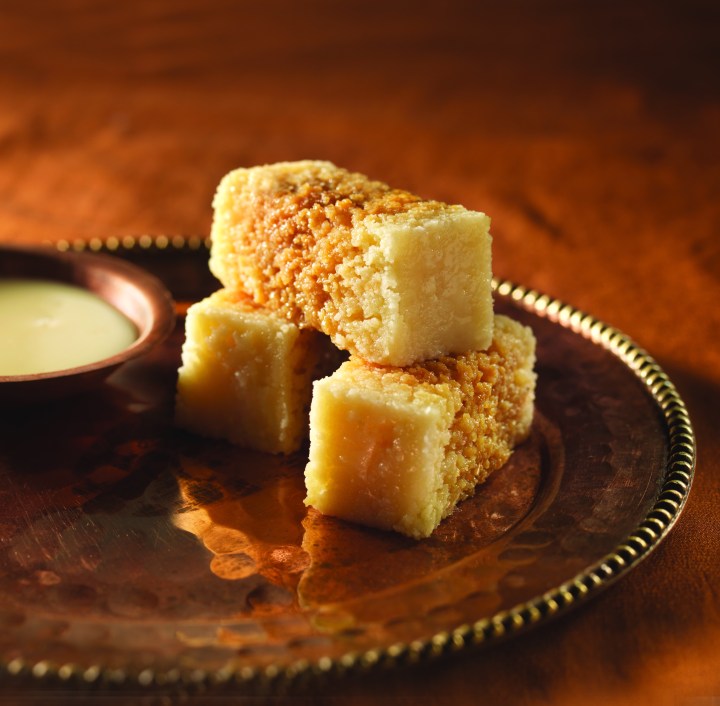
Brar's, a popular restaurant and sweet shop, is famous for it's milk cake. This Diwali the company has produced 175,000 lbs. of food/sweets for Diwali

Brar’s, a popular restaurant and sweet shop, is famous for it’s milk cake. This Diwali the company has produced 175,000 lbs. of food/sweets in anticipation of Diwali. Photo courtesy Brar Food Culture of India

Thirteen years ago, when my family and I landed in the True North, that first Diwali, a few of us piled on to our cars and drove some 35 kilometres to Gerrard Street. It was a tired and dated boulevard some of you know as “Little India.” The experience lacked the characteristic boisterousness of  celebrations back home.

Today, it’s a completely different landscape in the Greater Toronto Area (GTA). There are dozens of ethnic stores, smack dab in our neighbourhoods offering stunning diyas (earthen lamps), fireworks and mouth-watering mithai (sweets). You can fill all of the delicious confectionery in designer gift boxes embellished, with colourful stones and beads.

In the next few days, some of us will likely make a trip to Brar’s, an iconic restaurant/sweet shop to pick-up their signature milk cake, both regular and the chocolate infused version, motichoor ladoos and other assorted barfis.

Dial Pabla, 65, founder of Brar’s Food Cultures of India, eldest of seven children, landed in Canada in 1979 and set about translating his dream into a multimillion business. Today, that business spans across five countries. This is his story.

*****

Competing restaurateurs have tried sneaking their chefs into Brar’s  in an effort to decode the recipes, but these folks have met with little success.

That’s because the special ingredients, the proportion and processes are all a well-guarded secret, and kept under lock and key.

Dial, who tweaked the original recipes with his ingenuity, can afford to be smug because the recipes are a result of years of innovation and creativity. They cannot be replicated with a mere taste test. God knows, many have attempted.
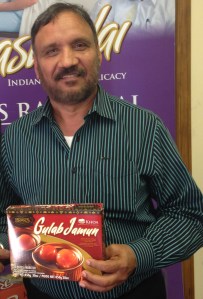
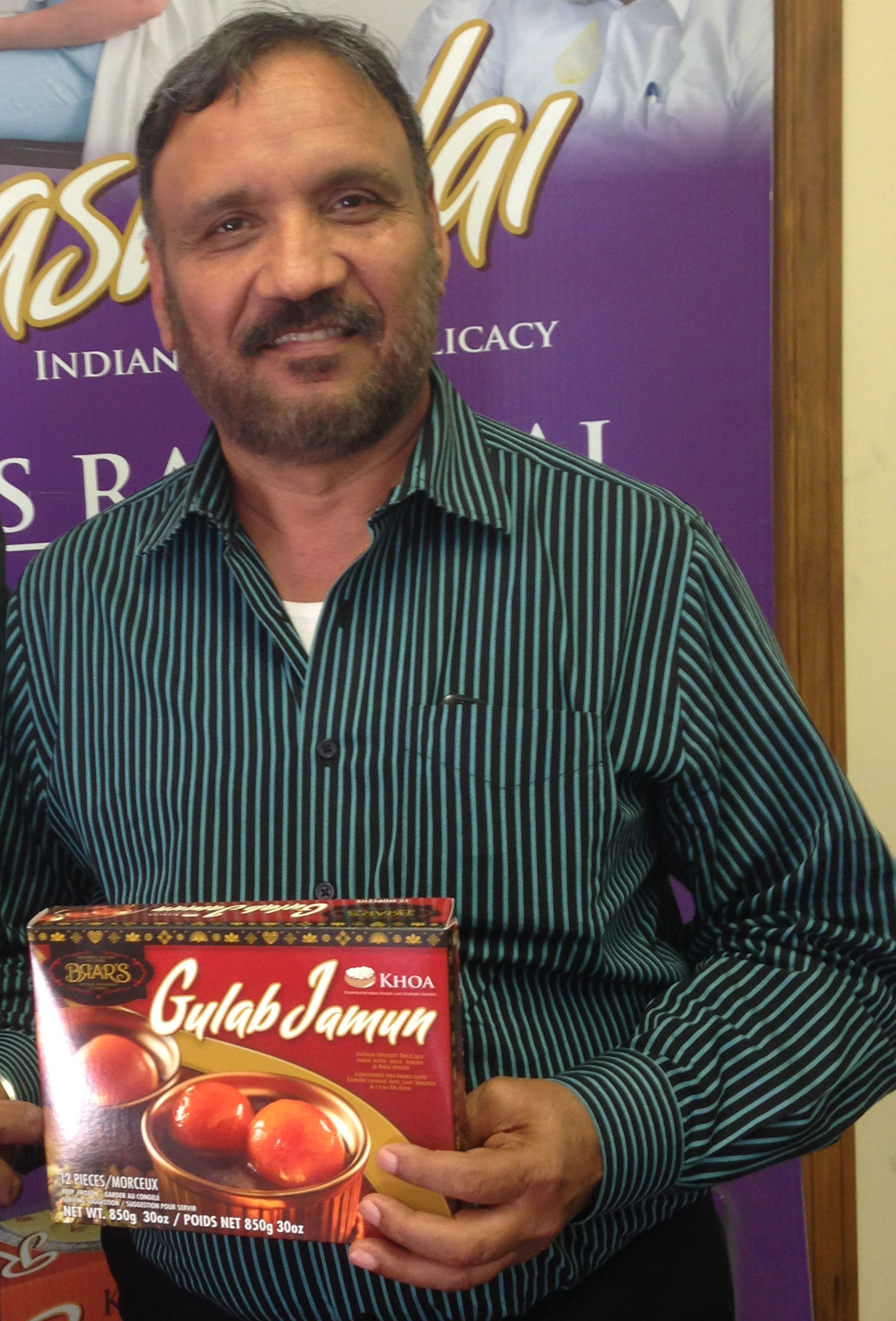
Dial Pabla, founder/owner of Brar's Food Culture of India started the company in the early '80s with one small store. Today, his empire extends to multiple restaurants and a manufacturing plant as well. Photo courtesy of Brar's Food Culture of India.

Dial Pabla, founder/owner of Brar’s Food Culture of India, started the company in the early ’80s with one small store. Today, his empire extends to multiple restaurants and a manufacturing plant as well.
Photo courtesy of Brar’s Food Culture of India.

“Our mithai is revolutionary because other people cannot knock-off our mithai,” Dennis Pabla, Dial’s son said. “My dad has used secret ingredients and has special formula.”

Pabla built his empire based on his love for food.  This year, the company has produced/made some 175,000 pounds of sweets and other products for Diwali.

The sprawling enterprise now includes chain of restaurants in the GTA, a manufacturing and distribution plant, and dozens of products that grace the shelves of supermarkets —both ethnic and mainstream —in Australia, U.S., Canada, Dubai and Singapore. The brand has become synonymous with quality.

Brar’s bustling restaurants lend a special pizzazz to the Festival of Lights. The jostling crowd, the huge tent pitched outside with rows and rows of colourful barfis, ladoos, kaju katris and salty snacks transport you to a different world.

There’s a shared feeling of camaraderie with other shoppers because every Indian here wants to recreate familiar rituals of Diwali they experienced themselves.

Dial’s enterprising venture started when he purchased a small store in Gerrard Street, some four decades ago. Few years later, he moved into a nondescript unit at a strip mall in Rexdale.

“One key thing my dad always believed in was: in order to experience real success in life, one must continue to work well beyond the eight-hour shift,” Dennis said. “My dad liked to read about Arnold Schwarzenegger and would often quote him. His favourite quote was ‘if you want to be a winner then you have to make sure you begin after everybody gives up’… “

Dial’s oft repeated words of motivation have stuck with his sons. Dennis, in turn, sprinkles our chat with liberal doses of his dad’s wisdom, one of which is: “if you rest, you’ll rust…”

Dial got into the restaurant business in the ‘80s when Canada had strict controls over imports, so the untrained chef – with an instinctive palate and visionary business acumen- improvised with products available in Canada.

A few years after setting up shop, Dial purchased two stores to launch a full-fledged restaurant. His spirit of entrepreneurship and his cooking abilities took off. Soon, he expanded into other cities.

Dial is a vegetarian and even though the market was ripe for a non-vegetarian buffet, he remained adamant about not giving in. Some years ago, he succumbed and launched a non-vegetarian place, but gave it up and instead focused on turning Brar’s into Canada’s premier vegetarian eatery. Not content to offer an extensive buffet and a sweet shop, five years ago Dial invested in state-of-the-art machinery and the company started manufacturing packaged food such as Ras malai and paneer.

“From the initial three products, we now have 40 products in stores,” Dennis said. “In the beginning, we used to count the number of grocery stores our products were in, now we count the countries…”

And while Brar’s continues on its upward trajectory building a loyal base of customers, Diwali will be that much sweeter, thanks to Dial’s recipes.
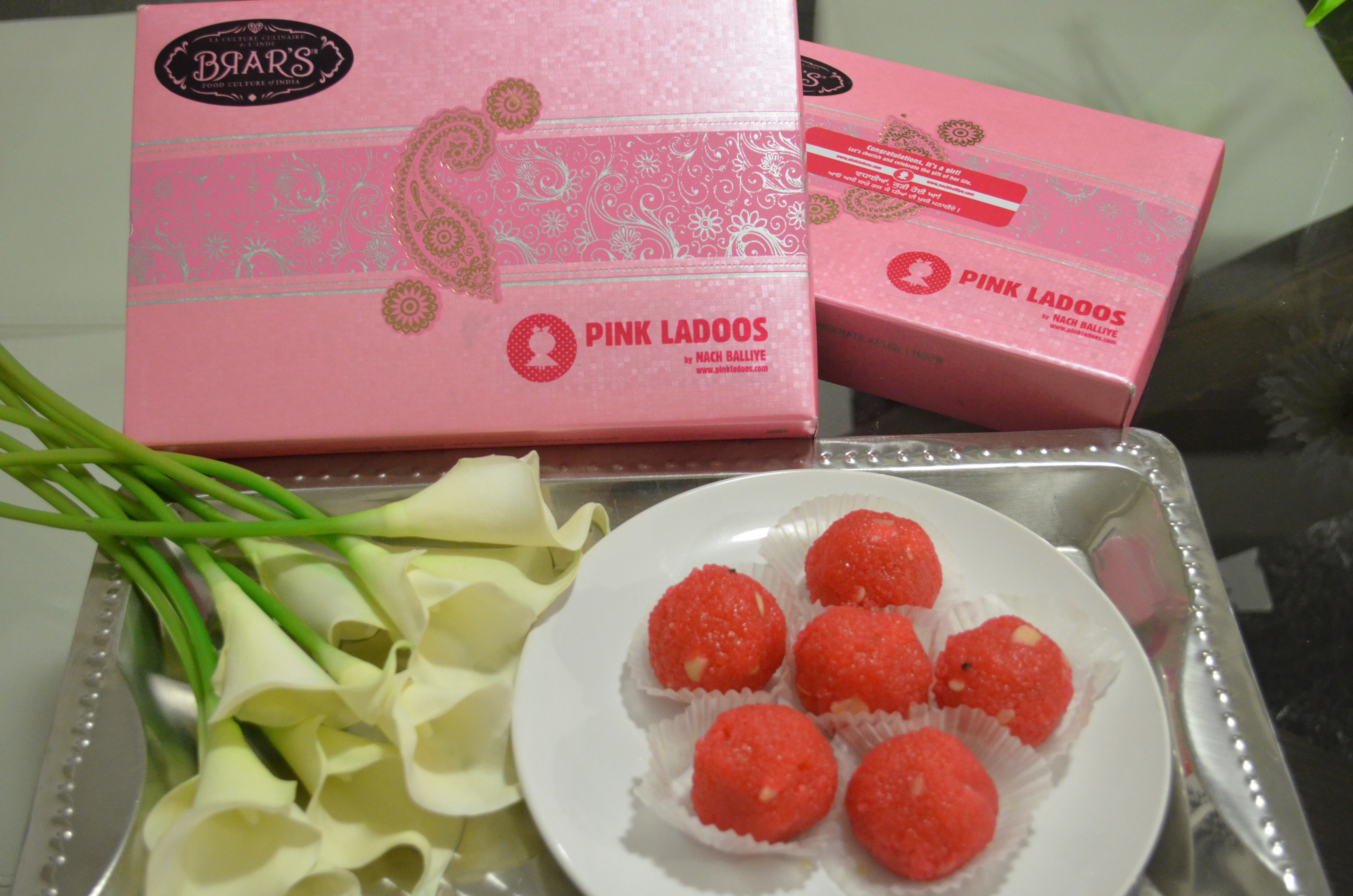
Recently, Brar's Food Culture of India, helped Nach Balliye, a youth group from Brampton to educate and promote gender equality, by donating 100 lbs. of pink ladoos. This Diwali, the company has made/produced some 175,000 pounds of food to meet the consumers' demand for Diwali. Photo courtesy, Nach Balliye.

Recently, Brar’s Food Culture of India, helped Nach Balliye, a youth group from Brampton to educate and promote gender equality, by donating 100 lbs. of pink ladoos. This Diwali, the company has made/produced some 175,000 pounds of food to meet the demand for Diwali.
Photo courtesy, Nach Balliye.

Here’s wishing you all a very Happy Diwali. Much like Dial, let’s all find and pursue our passion, and have fun making the magic happen.

Kunal Nayyar’s warm personality makes Dr. Cabbie a must-see

Standard
Dr. Cabbie is a Canadian film featuring Kunal Nayyar, Isabelle Kaif and Vinay Virmani, set to release, Friday, Sept. 19.

Dr. Cabbie is a Canadian film featuring Kunal Nayyar, Isabelle Kaif and Vinay Virmani, set to release, Friday, Sept. 19.

My day job allows me to meet and chat with politicians, musicians, artists, newsmakers and on rare occasions, an odd criminal or two.
I have had my share of interactions with jerks that lug around a sense of entitlement like dandruff on black shirts, to ego-less entities with absolutely no trace of arrogance.
Kunal Nayyar, 33, definitely falls into the latter category.
Some weeks ago, when I sat down with the rising stars of Dr. Cabbie, a Canadian movie with liberal dose of Bollywood, I was naturally excited to snag one: one interviews with the movie’s three actors — Kunal, Isabelle Kaif and Vinay Virmani.
As an avid fan of Big Bang Theory, I wanted to meet Kunal, aka Rajesh Kootrapalli, so I could tell him his portrayal as a socially awkward nerd in the CBS sitcom elevates the show’s comedy metre to lofty levels each week. The meeting/interview also gave me exclusive bragging rights in the newsroom where every single reporter/editor and photographer is a die-hard fan of Kunal and BBT.
Kunal enjoys mega celebrity status here and elsewhere. Canadians love him and his show. Who hasn’t chuckled at Raj’s antics, especially the hilarious side effects of his selective mutism, an anxiety disorder, because of which his character can’t talk to women unless he’s all liquored up.

So, coming back to the media launch of Dr.Cabbie, I reached the downtown hotel 35 minutes before the appointed hour, but there may have been few no-shows from some news outlets, so my interview was moved up. Before I could collect my wits or gather my notes, I was facing Kunal who despite his exhausting schedule, greeted me with a real smile (the kind that reaches the eye) and introduced himself.
He was the real deal. He answered questions I threw at him with sincerity and self-deprecating humour. A few moments into the talk, It became pretty evident that Kunal doesn’t lug “star” baggage. He had no airs.
Here’s the interview Toronto Desi Diaries (TDD) had with the Big Bang Theory star. Kunal spoke about his role in Dr. Cabbie and briefly, just so briefly, touched upon Canada’s immigration system. So, I suggest y’all brew a cuppa, sit back and read on.

TDD: Did you say “yes” to Dr. Cabbie because your character was the opposite of Raj in Big Bang Theory?
KN: I love playing Raj on Big Bang, It’s a dream come true for me to be on the show. So, when I had time off in the summer and I was looking at movies, the script (Dr. Cabbie) came up on my agent’s desk. One of the things I have been telling everybody is: I want to play a character that’s different from Raj because I am a trained actor and I thought it would be fun to spread my wings and show the world I have many different facets.
So, it was fun to play a cab driver whose centre of gravity is way down. Someone who heckles women and shows-off his chest hair, drinks, eats and lives life with reckless abandon.

From L to R: Isabelle Kaif, Kunal Nayyar and Vinay Virmani, as they arrive for the music launch of Dr. Cabbie in a yellow and red cab. Photo by Radhika Panjwani

From L to R: Isabelle Kaif, Kunal Nayyar and Vinay Virmani, arrive for the music launch of Dr. Cabbie in a yellow and red cab.
Photo by Radhika Panjwani

TDD: Was it a challenge…?
KN: Every summer, when we get to the first table read (for Big Bang), I always worry I have forgotten how to act. I think every actor goes through that. You are sitting there wondering, “Hope, I haven’t forgotten to be funny.”
The truth is: The writing is so good that as soon as you begin to say the words, it flows into you. The writing — for eight seasons of Big Bang has been consistent — and that’s so rare.
TDD: How was your experience in Dr. Cabbie different from that of the Big Bang Theory in terms of the set?
KN: For Big Bang, we shoot in front of a live studio audience in the Warner Brothers Studio. All the sets are built on the stage. With Dr. Cabbie, we shot a lot of stuff all over Toronto. So, it was fun because we would be driving along the streets in this cab with a camera on us shooting a scene and people would wave at us. In Big Bang, you were in a closed environment whereas in Dr. Cabbie we were exposed to the elements and the cities of Toronto, Mississauga and Brampton.
TDD: The film showcases the immigrant experience, were you able to identify with the struggles of the characters?
KN: I have lived the immigrant story. I moved to the U.S. when I was 18.
Will the movie deter people from filing their papers to Canada? I am not sure. I hope what people actually take away from this movie is: things don’t always go according to plan in life. They don’t. Life takes a U turn. There’s no blueprint or secret formula. Stuff happens and ultimately, it’s about how you pick-up and move on. One has to live life with a big heart and be willing to do anything to realize their dreams…

TDD: How’s your family reacting to your venture into films?
KN: My family is very proud. It’s very easy to become complacent in this industry. I never want to be a victim of that. I want to work as hard as I can and do as much as I can.

Next up: Toronto Desi Diaries’ up, close and personal meetings with the other two cast members of Dr. Cabbie —Isabelle Kaif and Vinay Virmani and my chat with a real-life Dr. Cabbie/trucker – Dr. Balvinder Singh.

Rung De ONE brings blast of colours with a message of unity

Standard
Rung De ONE, an event inspired by the festival of Holi, was hosted by Media Works!! and PGA International. It was resounding success. Supplied photo

Rung De ONE, a colourful event inspired by the festival of Holi, was hosted by Media Works!! and PGA International. Photo by Aparajit Bhattacharjee.

A few summers ago, when a former editor of mine scurried around the office juggling gifts and wrapping paper, I asked her if the presents were for someone’s birthday or anniversary.
Turns out, it was for neither. The editor and her family were celebrating Christmas that weekend.
Christmas in July? Not just quirky, but clever, I thought.
So, when I was invited to Rung De ONE last week, I realized it was June and technically, Holi had come and long gone.
But, the idea of celebrating Holi outdoors drew us to this plaza in Mississauga, Ont. where plumes of colours floated in the air. Dozens of people gyrated to the beat of foot-stomping Bollywood numbers and some classic melodies as well. Everyone tossed, smeared and threw the powdered dye on each other.
We had the time of our lives. The afternoon was reminiscent of the past and even though we did not know many people, we felt a camaraderie with everyone around us.

Rung De ONE, an event inspired by the Indian festival of Holi made its debut in Toronto. Organizers invited not just South Asians, but everyone to sample the culture of India. Supplied photo

Rung De ONE, an event inspired by the Indian festival of Holi made its debut in Toronto. Organizers invited not just South Asians, but everyone to sample the culture of India. Photo by Irfan Ali.

Sumit Ahuja, founder of Media Works!! and an event planner hosted Rung De ONE with her good friend Mitul Kadakia of PGA International.
The duo and their tireless troupe of volunteers and team members managed to replicate the ambience, sounds, and colours of Holi by adding their own special twist. So much so, people are still talking about it. From the sound of it, Rung De ONE will likely become an annual ritual for Canadian desis and the larger community.
“It’s not just me, everybody itches to play with colours and misses Holi in Canada,” Sumit told Toronto Desi Diaries. “Rung De ONE was actually planned to be held during Holi time but due to the brutal weather conditions then, we decided to postpone the event as we did not want to compromise the event being held outdoors like the true spirit of Holi.”
Once the initial logistics were ironed out, organizers decided to fling the hypothetical doors of Rung De ONE to not just desis, but people of other cultures and invite them to play. So, much like Canada’s diversity, the vibrant colours that revellers flung and danced with at Rung De ONE sort of became a symbol of unity. What a brilliant idea.
Rung De ONE had Sumit’s signature all over it. The music kept the crowd on its feet, the food was mouth-watering and the performance by Shiamak’s Toronto Dance team added a pizzazz to the celebrations.

Sumit Ahuja, CEO of Media Works!! (left) seen here playing Holi in May with her friend Mitul Kadakia of PGA International. Supplied photo

Sumit Ahuja, founder of Media Works!! (right) seen here playing Holi in June with her friend Mitul Kadakia of PGA International. Photo by Irfan Ali.

So, who’s Sumit Ahuja? And why is she being featured here in this blog?
This blog, as I repeatedly point out, is about faces in the crowd that are on their ascent to success. These movers and shakers of Toronto are people starting on their journeys armed with passion, talent and a special something that sets them apart from other mortals.
As a key player shaping the cultural landscape of Toronto, Sumit, I believe is one of the people that can translate ideas and execute them flawlessly.
This transplant from Delhi is an events and media relations specialist with a degree and diploma from New Delhi and Toronto. Her stint with Wizcraft, a well-known event management company in India, helped her hone her passion and understand the pulse of the entertainment industry. Her company Media Works!! was responsible for hosting the Indian International Film Awards (IIFA) events in Brampton which included managing the presence of Bollywood star Bipasha Basu as she made appearances in the city. Additionally, Sumit’s also involved with Mosaic and helps host the South Asian Heritage Festival in Mississauga.

Much like any immigrant that arrives in Canada, Sumit too faced the stark reality of having to pay the bills. So, she temporarily put her dreams on hold and opted for a job with a leading bank while she juggled the responsibility of nurturing a fledgling company— Media Works!!— that she started some five years ago.

“I was thankful to my bank job but it was time to move on and chase my dreams,’’ said Sumit about her decision to leave her job. “Every company has something unique to offer as each one of us is gifted in some way. With my gift of being a people’s person, I have shaped Media Works!! to build long term business relationships. I think, consistency is the key to this relationship and my company delivers on that promise.”

Dozens of people enjoyed the colourful festival of Holi recently in Toronto at the Rung De ONE event. Supplied photo

Dozens of people enjoyed the colourful festival of Holi recently in Toronto at the Rung De ONE event. Photo by Irfan Ali.


Handling the challenges of running an event management company doesn’t faze her because the vision of Media Works!! is built on teamwork. As a mentor to her team, Sumit believes in guiding her group with wisdom.
So, tip of the hat to the woman who pulled off a Holi celebration in June. May we suggest a Halloween-themed Diwali in July? What about a Thanksgiving-Navaratri in September? Hey, just sayin’.

Toronto’s nightingale Jonita Gandhi wows the Bollywood off its socks

Standard
Toronto crooner Jonita Gandhi reads out the contents of a journal she had started when she was seven. Jonita has sung half-a-dozen tracks for Bollywood films, including the title song of Chennai Express, which she sung along with S.P. Balasubramanium, the South Indian icon. (supplied photo).

Toronto crooner Jonita Gandhi reads out the contents of a journal she had started when she was seven. Jonita has sung half-a-dozen tracks for Bollywood films, including the title song of Chennai Express, which she sung along with S.P. Balasubramanium, the South Indian icon. (supplied photo).

We all know, breaking into the ironclad bastion of Bollywood, as an artist requires part luck, plenty of perseverance and oodles of talent.

Toronto crooner Jonita Gandhi, 24, it seems has what it takes. Little wonder then that her name appears as a playback singer in half-a-dozen Bollywood songs already.

On a recent spring-like day, I sat with Jonita and chatted with her on her musical odyssey, the glamour of Bollywood (hardly, it’s all work), homesickness (it’s real) and the life of a rising playback singer (apparently, it’s a waiting game).

Not many people are privy to the fact that way back when she was 7; Jonita had scrawled her dreams and flung it into the universe via her diary. This journal— which would go missing only to be found again every couple of years—had sporadic entries.

So, few weeks ago, when the Toronto native came home from Mumbai, her parents suggested she take an inventory of her room and toss out the stuff she no longer needed. The spring-cleaning unearthed the cherished journal.

“I want to be a singer,” the affirmative words, it appears, were written when Jonita was seven. Dozens of pages later as the childish penmanship became more assured, as did her single-mindedness.

“I am 16 and still not famous,” she rued during her teens. “When will I be famous?”

She and I chuckled over the desperation of those heart-felt pleas.

As Jonita connected with her younger self, I couldn’t help marvel at how her dreams had indeed translated. Not too many can revisit their childhood musings and realize—gleefully—that they are indeed living it.

So far, the Western University alumni, has proved her mettle with hits such as the title song of the blockbuster hit Chennai Express, Kahaan hoon main (Highway), Implosive Silence (Highway), Eai Ki Prem (Bangali Babu English Mem), Aabhi Jaa and others.

As a singer, Jonita’s versatility can be credited to her training in western classical singing and other musical influences she imbibed growing up in Canada.

Her talent was nurtured and encouraged at home because Jonita’s father, Deepak’s passion for music refused to be silenced as he pursued engineering in Russia and later during his struggles as a new immigrant in Canada. Also, Mandeep, her brother plays the dhol and mom Sneh is the glue that holds the family together.

“Once I graduated, I decided I would try singing full-time for a year and then see what happens,” Jonita told Toronto Desi Diaries. “My debut (in Bollywood) happened on the spot. I was visiting the studios of music director Vishal Shekhar who was at that time working on the title song of Chennai Express. Vishal Shekhar had heard my online work and knew what I sounded like. He took a chance and asked to me try a scratch.”

So, Jonita lent her voice to the song—which included the dulcet pipes of South Indian icon S.P. Balasubramanium. After her recording, she was told the final decision on whether the track would make it into the big screen rested with the film’s leading man Shah Rukh Khan, director Rohit Shetty and the producers. The song did make it and Jonita’s singing prowess found a springboard.

There’s this interesting story of how Jonita’s music struck the right chord with Bollywood legend Amitabh Bachchan.

Here’s how it all happened. Even before she set-off for Mumbai, Jonita had build an impressive online portfolio. Her collaboration with pianist Aakash Gandhi (no relative) and flutist Sahil Khan was groundbreaking. The talented trio basically stripped popular Hindi/Punjabi music of all its layers and created melodies that were uncluttered, organic and simplistic.

Couple of their YouTube videos went viral and one landed in the hands of the CEO of Balaji Films who tweeted the link with note on how impressed he was. Turns out, Amitabh Bachchan (who was following the CEO) heard, agreed and re-tweeted, “I completely agree.”

So, for a Toronto gal to get nods from not one, but two Bollywood heavyweights—Shah Rukh Khan and Amitabh Bachchan— means Jonita Gandhi is going to croon her way into the hearts of millions, soon.


MuslimFest builds bridges with humour, food and culture

Standard
Volunteers of MuslimFest are the backbone of the hugely popular summer festival. This year's event will run Aug. 2-3 at Celebration Square in Mississauga, Ont. Photo courtesy of MuslimFest.

Volunteers of MuslimFest are the backbone of the hugely popular summer festival. This year’s event will run Aug. 2-3 at Celebration Square in Mississauga, Ont.
Photo courtesy of MuslimFest.

An ardent wish of every event organizer in the Greater Toronto Area (GTA) would be perhaps be this: to replicate the success MuslimFest.

In the summer of 2004, three organizations— Sound Vision, DawaNet, and Young Muslims Canada (which is no longer associated)— came together to put out their first event at the Living Arts Centre in Mississauga. That first year, the festival was largely vendor-driven event and included the wares of entrepreneurs who sold everything from jewelry, mouth-watering halal food, eye-catching hijabs and clothing. The event saw 8,000 people. Nine years later however, the festival became a magnet for both the young and the old. Attendance soared to 13,000 visitors.

“The idea for the MuslimFest came about three years before the first event,” said Lina Rahman, artist development and management and legal advisor for MuslimFest told Toronto Desi Diaries. “There was a meeting of minds on what we could do for the youth in our community and what is it that will unify our youth. There wasn’t really any major event in and around Toronto at that point that focused on youth engagement. The idea was for the festival to be responsive to youth. The response however was huge.”

Masses of people pour in for what has become a multi-day celebration of the art, culture and heritage of Muslims in the Greater Toronto Area.

From Left to Right: Mississauga Ward 6 Councillor Ron Starr presents the flag of the city to MuslimFest's Rina Rahman, artistic development & management and legal advisor, MuslimFest and Saffraz Khan, event director, MuslimFest 2013.

From Left to Right: Mississauga Ward 6 Councillor Ron Starr presents the flag of the city to MuslimFest’s Lina Rahman, artistic development & management and legal advisor, MuslimFest and Saffraz Khan, event director, MuslimFest 2013.

For the past two years, MuslimFest has been held place at Celebration Square in Mississauga to accommodate large number of people that gather. New components including acts by several stand-up comedians, performances by emerging and well-known artists and a vendor bazaar, all add to the overall appeal.

It would then be apt to say MuslimFest has successfully branded itself as an event that celebrates the diversity in the Muslim community through humour, food, art and entertainment.

“There are a couple of reasons that make this event popular,” Rahman said. “First of all, it was the first of its kind to address youth in the community, what I mean is although there were others, they were more religious in nature. MuslimFest focused on the creative side, which until then had not been addressed. Secondly, MuslimFest was able to bring the entire community together. It was always intended to be the representative of the whole community.”

Organizers have kept an ear to the ground and incorporated suggestions that came their way because ultimately the idea is to give folks something they enjoy.

To that end, in 2011, the festival invited stand-up comic Rabbi Bob Alper to headline at MuslimFest. What was interesting was that Alper was a perfect conduit to promote friendship between two cultures—Muslims and Jewish.

That year, the festival made headlines because of the tongue-in-cheek headline organizers added to their press release, which announced: 10,000 Muslims laugh at a rabbi.

“I was thrilled to receive the invitation to appear at MuslimFest,” Alper noted in a press release. “During the past seven years I’ve seen repeatedly how shared laughter diffuses suspicion and builds bridges between formerly unconnected communities.”

Alper, considered the world’s only practicing clergyman doing stand-up comedy internationally, helped silence critics of MuslimFest who were eagerly waiting to stir-up controversy.

After it pulled off a creative coup with Alper, in 2012, organizers did not rest on their laurels. They sought to offer new attractions and artists by bringing in comic book creator Naif Al Mutawa the creator of THE 99; the first Muslim-inspired comic book and other Canadian and internationally renowned names such as Tom Vandenberg, Irfan Makki, Junaid Jamshed, Baba Ali Zain Bikha and Raef.

MuslimFest celebrated its 10th anniversary last year with some 26,000 revelers. If that’s not success, what is?

Kitchener, Ont. native Dawud Wharnsby, a Canadian singer/songwriter/poet best known for his work in musical poetic genre interacts with his young fans at the MuslimFest. Photo courtesy, MuslimFest.

Kitchener, Ont. native Dawud Wharnsby, a Canadian singer/songwriter/poet, best known for his work in musical poetic genre interacts with his young fans at the MuslimFest. Photo courtesy, MuslimFest.

“MuslimFest is supposed to be a celebration of our culture, our art, our history specifically within the Canadian context,” Rahman said. “Our mandate is to build bridges. It’s not necessarily the element of fun or the carnival environment that brings people together, but comedy and food. We make conscious decision every year on who can we bring that’s not only fun, but would be able to speak to the wider community.”

Other cities and organizations have desperately tried to duplicate the success, but none have succeeded.

“It (MuslimFest) has broken stereotypes,” Rahman says. “The most important thing for all of us serving in the festival’s committee is: yes, we’re Muslims, but we are also Canadians…”

The 2014 MuslimFest is scheduled for Aug. 2-3 at Celebration Square in Mississauga.


Kathak in Canada would have faded into sidelines if not for Rina Singha

Standard
Toronto's Kathak legend Rina Singha, 77, will be presenting a show starting Thursday, March 20 to Saturday, March 22 at Harbourfront Centre. The show is an ode to her guru Shambu Maharaj. Supplied photo.

Toronto’s Kathak legend Rina Singha, 77, will be presenting a show starting Thursday, March 20 to Saturday, March 22 at Harbourfront Centre. The show is an ode to her guru Shambu Maharaj.
Supplied photo.

The Indian dance form of Kathak can be described as a motion of pure grace and poetry.

There’s a certain economy of space and time. To a bystander unschooled in any dance form whatsoever, the dancer’s quick movements and the music’s short staccato bursts may appear completely in tandem.

In India, religion and arts, oddly enough are interwoven. For instance, the pursuit of classical dance and singing has by and large been the domain of Hindus and to some extent the Muslims.

So, it’s fascinating that Toronto native Rina Singha, 77, has not only elevated Kathak on the world platform, but as a Christian, she has immortalized her spirituality, faith and fables into a visually compelling stories through Kathak.

In what can be described as an ode to her teacher—Guru Shambu Maharaj—Singha, and choreographer/friend Danny Grossman are presenting Circle of Bricks- Rhythms of Kathak, starting Thursday, March 20 and running until Saturday, March 22, at the Harbourfront Centre (Fleck Dance Theatre). On Thursday and Friday the show will run at 8 p.m. on Saturday, it’s at 3 p.m. Tickets cost $30/person.

When Singha arrived in Toronto from India in 1965, she brought with her, her love for a dance form that may have been dismissed as “quixotic and exotic’ in the arts scene here. Over the next five decades, she worked tirelessly to ensure her beloved Kathak was part of the mainstream art scene.

At 77, Toronto's Rina Singha remains as committed as ever to Kathak. The Toronto native has single- handedly elevated Kathak into the mainstream arts scene here in Canada. Supplied photo

At 77, Toronto’s Rina Singha remains as committed as ever to Kathak. The Toronto native has single- handedly elevated Kathak into the mainstream arts scene here in Canada.
Supplied photo

A Canadian legend, a trailblazer and a dance icon, Singha’s role in keeping the embers of century-old dance alive here in Canada cannot be ignored.

The dancer was introduced to Kathak at 14. While pursuing her Masters degree, she was chosen—through a government-sponsored scholarship—to train under Guru Shambhu Maharaj. Maharaj is to Kathak what Wayne Gretzky is to hockey.

As Maharaj’s student, Singha learned by unlearning. She started from scratch. She mastered the slow tempos over and over again. Then she perfected the opening exercises for three hours everyday. This became her ritual for the next six months. A penchant for perfection and a strong dance ethic became the foundation on which she soared.

“The slow tempos helped to perfect the minute details and nuances of the wrists, neck and eyes, that highlighted the broader arm and body movements,” she recalled.

The next few decades saw Singha experiment with choreography. She enriched the pieces by sprinkling it with life experiences. Her works include: Songs From Exile Walls, Lullabye and Lament, Prithvi (an Earth Narrative) and full-length Biblical works: The Seekers: from the Garden of Eden to the Walls of Jericho.

Singha’s collaboration with Grossman, much like her meeting with Maharaj was orchestrated by destiny. Grossman’s expertise in Christian dance enabled India-born Singha to stray from the tried and tested formula. She created a new repertoire.

Kathak in Canada would have faded into anonymity if not for Rina Singha, 77, who immortalized Christian fables by connecting it to Kathak.

Kathak in Canada would have faded into anonymity if not for Rina Singha, 77, who immortalized Christian fables by connecting it to Kathak.
Supplied photo.

“I am a Christian and I was brought up on Bible stories,” Singha said. “These stories were more meaningful to me than the usual stories of Kathak repertoire, which I could relate to in terms of their human emotions, but not necessarily in terms of their spirituality.”

When incorporating biblical stories, Singha stuck by the rules and chose appropriate laya (speed/tempo) and tala (rhythm). After her first work Genesis, she went on showcase Yeshu Katha in 1991.

Singha describes Circle of Bricks as a “metaphor for creating meaningful Kathak works that extend beyond boundaries of space and time by becoming relevant to a new era, while maintaining the integrity of the dance form and remaining connected to its roots and the soil which first nurtured it.”

Knowing her, we know, it will be something that should not be missed.

For tickets visit here.